
Hugo Carter · 11 September 2026
Uncovering Patterns in Search Visibility After Platform Relocations for Independent Creators
Independent creators frequently shift between content platforms and hosting services when seeking better tools, revenue models, or audience reach, and researchers track how these moves alter search engine rankings over time. Data compiled through September 2026 reveals consistent fluctuations in visibility that depend on migration timing, content transfer methods, and retained domain authority signals. Observers note that traffic often dips immediately after a relocation yet rebounds when certain technical elements stay intact during the transition.
Common Relocation Triggers Among Creators
Creators move when platforms alter algorithms, fees, or content policies, and studies from multiple regions document these shifts as responses to market changes. One analysis by the OECD highlights how digital platform updates in Europe prompted independent video and blog producers to explore alternative hosts in 2025, while similar patterns appeared in North American creator communities facing rising service costs. Those who studied migration logs found that announcements about policy changes often preceded relocation waves by several weeks, giving creators time to plan domain transfers and content exports.
Platform stability plays a role too, since outages or feature removals push users toward competitors that promise longer-term support. Figures from industry reports indicate that creators managing multiple income streams tend to relocate more often than those focused on single platforms, and the process typically involves exporting archives, updating canonical tags, and notifying search engines through sitemaps.
Visibility Patterns Documented After Moves
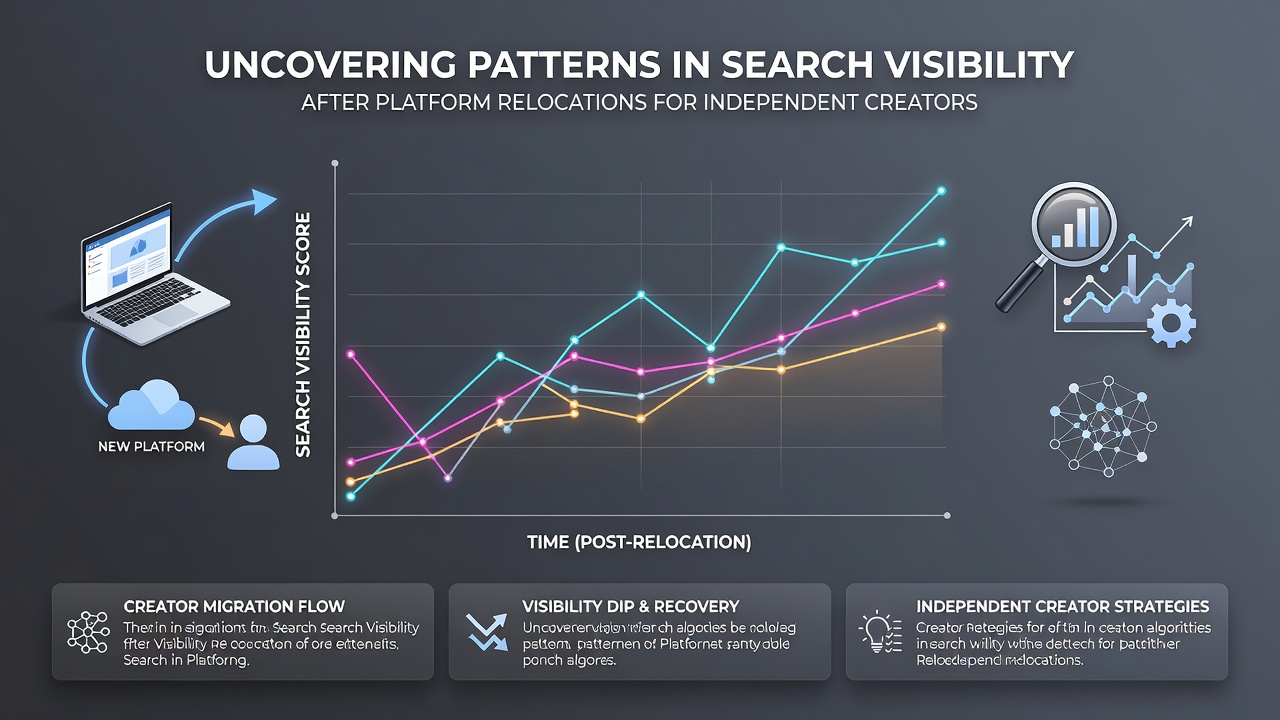
Search visibility frequently experiences an initial decline lasting between two and eight weeks, after which recovery varies based on how thoroughly creators preserve backlinks and metadata. Researchers at academic institutions in Canada tracked 150 independent sites that migrated hosts between 2024 and 2026, and the resulting dataset showed that sites retaining original URLs maintained higher average positions than those switching domains entirely. Short-term drops appear across most cases, yet longer-term gains occur when new platforms offer stronger technical infrastructure that search crawlers index more efficiently.
Patterns also differ by content type, with text-heavy blogs showing faster rebounds than video or image portfolios that rely on embedded media files. Data indicates that creators who submit updated sitemaps and request re-indexing through official search console tools see quicker stabilization, whereas those who skip these steps encounter extended periods of reduced impressions in search results.
Technical Elements That Influence Outcomes
Domain authority transfer stands out as a critical factor, since established backlink profiles help new locations retain ranking momentum when handled correctly. Experts have observed that 301 redirects implemented promptly reduce the severity of visibility loss, while incomplete redirects lead to fragmented indexing that search engines resolve more slowly. Content duplication checks become relevant when material appears on both old and new platforms simultaneously, and studies show that setting proper canonical tags prevents duplicate content flags during the overlap period.
Page speed improvements on the destination platform contribute to eventual ranking gains, and creators who optimize images and scripts before full migration report stronger performance metrics within the first quarter after the move. Mobile responsiveness also matters, as search algorithms prioritize sites that deliver consistent experiences across devices, and relocations to hosts with better mobile frameworks correlate with improved visibility in mobile search results.
Regional Data and Industry Comparisons
Reports from the Australian Competition and Consumer Commission examine how platform changes affect small content businesses in the Asia-Pacific region, revealing that creators who diversify across multiple hosts experience smaller visibility disruptions than those dependent on single services. Similar findings emerge from university-led projects in the United States that analyzed creator forums and public migration announcements, confirming that proactive communication with audiences during transitions helps maintain referral traffic that supports search signals.
Industry organizations tracking digital publishing note seasonal variations as well, with relocations occurring more frequently at the start of fiscal years when budget reviews prompt platform evaluations. Those who examined aggregated analytics across thousands of creator sites found that September periods in particular show elevated migration activity, coinciding with annual performance assessments and contract renewals.
Conclusion
Patterns in search visibility after platform relocations follow predictable timelines when technical best practices are followed, and available data through September 2026 supports structured approaches that preserve authority signals while adopting new infrastructure. Creators who monitor indexing reports and adjust redirects accordingly encounter fewer prolonged setbacks, whereas incomplete preparations extend recovery periods. Continued observation of these trends provides clearer guidance for future migrations across independent creator communities.