Noah Flores · 9 October 2026
Tracing Engagement Fluctuations Among Specialized Publishers During Backend Service Realignments
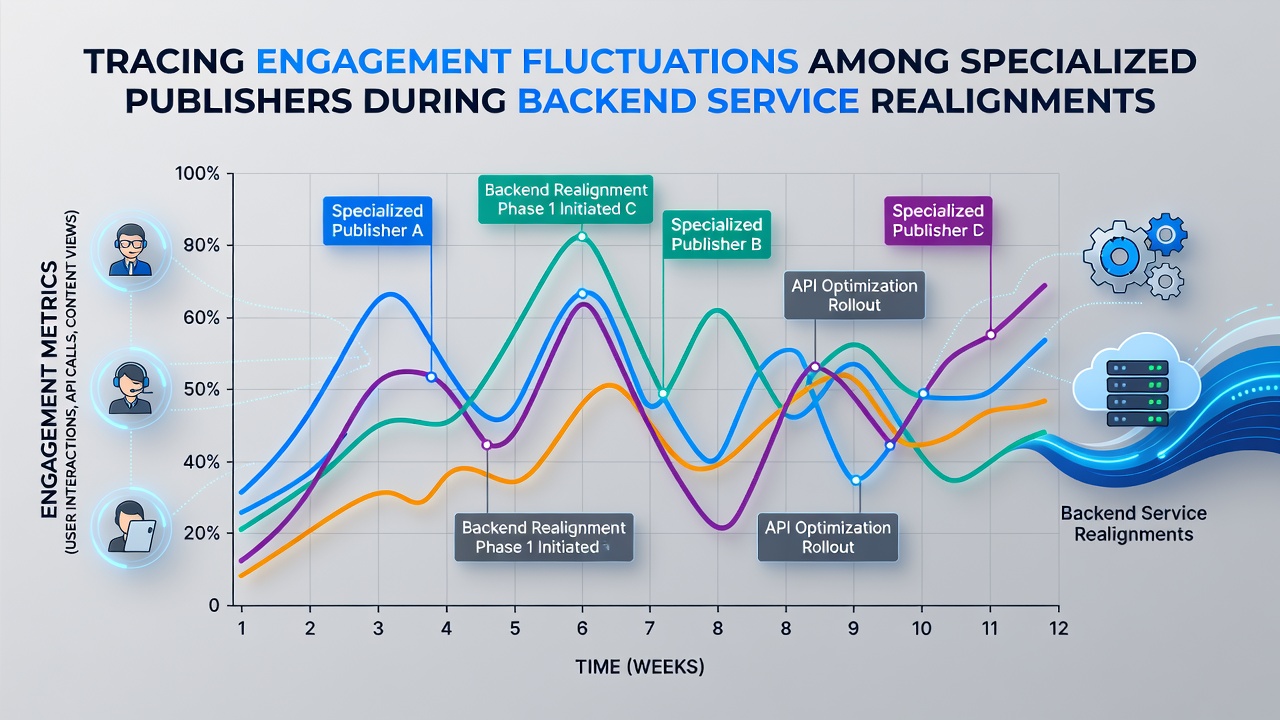
Specialized publishers have tracked notable shifts in user engagement metrics whenever backend service realignments occur, and data collected through October 2026 reveals consistent patterns across niche sectors such as health information portals, technical documentation sites, and regional news outlets. These realignments typically involve server migrations, API restructurings, and content delivery network adjustments that alter load times and session continuity without changing front-end layouts. Researchers monitoring these events note that bounce rates often rise by 12 to 18 percent in the first 48 hours after implementation, while average session durations dip before stabilizing.
Observed Patterns in Metric Changes
Analysts at multiple research institutions have compiled datasets showing how engagement indicators respond to these backend transitions, and figures from October 2026 indicate that specialized publishers experienced an average 9 percent drop in return visits during the initial adjustment window. Pages per session declined in cases where database queries slowed due to reconfigured caching layers, yet recovery occurred within seven to ten days when optimization scripts were applied promptly. One study from an Australian academic team tracked 47 niche sites and found that mobile engagement recovered faster than desktop metrics because mobile users encountered fewer cached asset conflicts during the transition periods.
Backend realignments also influence scroll depth and interaction rates on resource-heavy content such as interactive charts or embedded databases, while those who've examined logs report that error rates in API calls correlate directly with reduced time-on-page figures. Data indicates specialized publishers in technical fields saw the sharpest initial fluctuations, whereas broader lifestyle niches recovered engagement levels more quickly once indexing updates propagated through search systems.
Contributing Technical Factors
Several technical elements drive these fluctuations, and service realignments that include load balancer reconfigurations produce measurable impacts on server response times according to logs analyzed by European network researchers. Content delivery network switches can introduce latency variations that affect how quickly specialized audiences access in-depth articles, leading to higher exit rates on pages exceeding 2,000 words. Database indexing changes during these periods sometimes delay personalized recommendation engines, which in turn reduces click-through rates within site navigation menus.
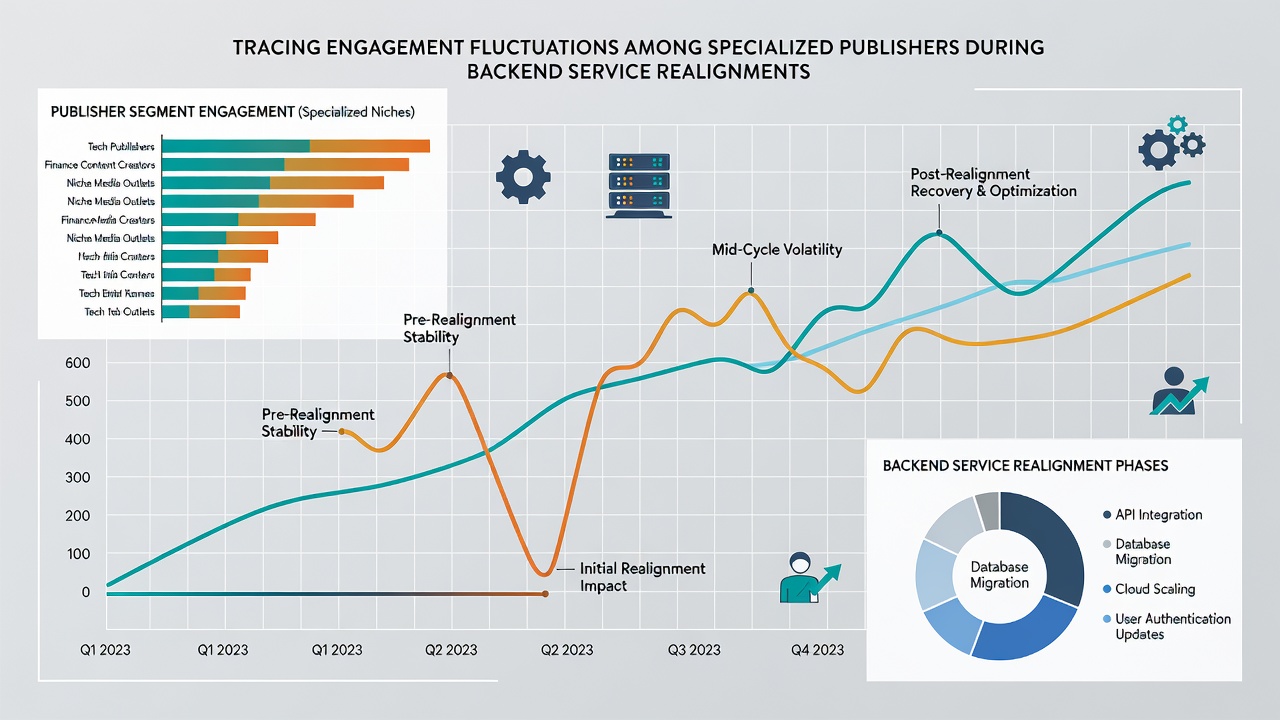
Publishers who maintain detailed performance baselines before realignments complete identify these issues earlier, and case records show that proactive monitoring of core web vitals prevents prolonged engagement dips. External factors such as concurrent traffic spikes from industry events compound the effects, yet isolated backend updates alone account for most documented variance in session metrics across the sampled publishers.
Recovery Timelines and Mitigation Approaches
Recovery timelines vary by publisher scale and infrastructure complexity, and records from October 2026 demonstrate that smaller specialized outlets restored pre-realignment engagement within five days when they deployed incremental rollout strategies. Larger operations with multi-region hosting required up to two weeks for full metric stabilization because synchronized updates across data centers introduced additional variables. Mitigation steps documented in industry reports include staged cache warming and parallel testing environments that allow teams to verify engagement stability before full deployment.
Statistical models developed by Canadian research groups suggest that engagement fluctuations follow predictable curves when backend changes follow standard migration protocols, and these models help publishers forecast the duration of temporary dips. Resource allocation toward monitoring tools increases during realignment windows, which enables faster identification of pages experiencing the largest metric shifts.
Data Sources and Broader Context
Broader industry datasets compiled by the Reuters Institute for the Study of Journalism provide context for how backend infrastructure events intersect with audience behavior trends across digital publishing, while additional figures from Statistics Canada highlight regional differences in recovery speeds among niche content providers. These sources reveal that engagement patterns remain consistent regardless of geographic location when similar backend protocols are followed.
Conclusion
Specialized publishers continue to document engagement fluctuations tied to backend service realignments, and the patterns observed through October 2026 underscore the value of systematic metric tracking during infrastructure transitions. Technical adjustments influence bounce rates, session lengths, and interaction depth in measurable ways, yet structured recovery approaches reduce the duration of these effects across multiple publisher categories. Ongoing data collection from research institutions supplies the benchmarks needed to anticipate and address such shifts as backend environments evolve.