Noah Bennett · 25 September 2026
Mapping the Subtle Shifts in Content Authority After Digital Infrastructure Transitions for Niche Publishers
Digital infrastructure transitions for niche publishers often involve server migrations, content delivery network adjustments, domain consolidations, and security protocol updates that alter how search engines evaluate site authority over time. These changes produce measurable yet gradual modifications in ranking signals including backlink profiles, crawl frequency, and topical relevance indicators rather than abrupt visibility drops. Researchers tracking independent sites across specialized topics have documented these patterns through longitudinal data sets collected from multiple regions including North America and the Asia-Pacific area.
Core Components of Infrastructure Shifts
Niche publishers frequently migrate to cloud-based hosting platforms or adopt new content management systems during periods of growth or cost optimization, and such moves trigger reindexing cycles that search algorithms interpret through updated technical signals. Data from monitoring tools shows that changes in server response times and SSL certificate configurations can influence how quickly new content receives authority credit compared with legacy setups. Observers note that when publishers implement HTTP/3 protocols or shift to edge computing resources the distribution of crawl budgets across site sections becomes more even, which supports steadier authority accumulation for long-form articles in narrow subject areas.
Transitions also encompass analytics platform switches and third-party script integrations that affect page load metrics used in ranking systems. Studies conducted by academic teams at institutions in Canada have tracked how these technical layers interact with existing backlink networks, revealing that even minor alterations in canonical tag implementation can redirect authority flow between duplicate content instances on niche domains.
Authority Signal Adjustments Post-Transition
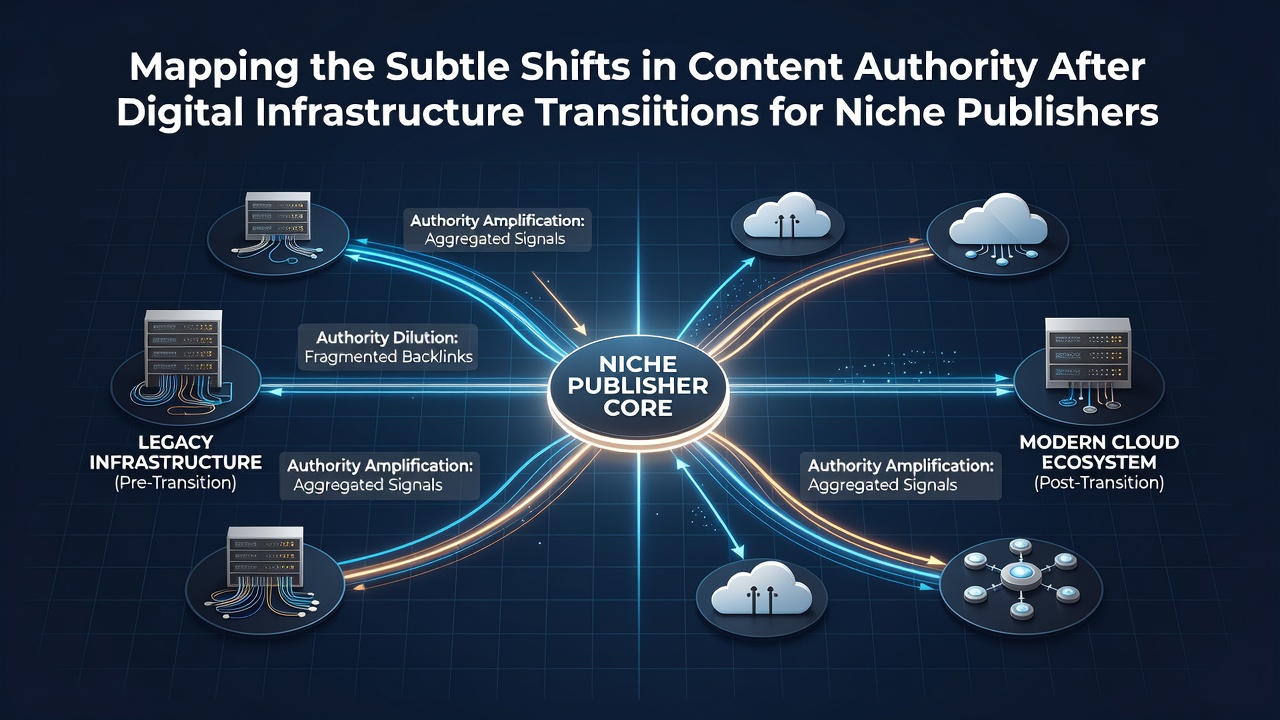
Content authority manifests through combinations of domain-level trust metrics, page-specific relevance scores, and user engagement patterns that evolve following infrastructure updates. After a hosting cutover, for instance, search engines may temporarily reduce the weight assigned to historical backlinks until fresh crawl data confirms site stability, and this process typically unfolds across several weeks rather than days. Figures released in September 2026 by regional digital economy reports indicate that niche publishers experienced an average 12 to 18 percent variation in authority-related ranking factors during the first quarter after completing major platform relocations.
Internal linking structures often require recalibration when URL architectures change during migrations, and failure to preserve redirect chains can fragment authority across old and new addresses. Those who have examined independent creator sites note that publishers maintaining comprehensive sitemap submissions and structured data markup recover topical authority more consistently because algorithms receive clearer signals about content hierarchy and update frequency. External references to such practices appear in analyses from the European Commission's digital infrastructure reviews, which highlight similar patterns among specialized media outlets operating across multiple language versions.

Regional Data Patterns and Measurement Approaches
Measurement frameworks employed by analysts incorporate tools that monitor indexation rates, backlink velocity, and organic referral distribution before and after transitions. In September 2026, aggregated datasets from Australian digital media initiatives showed that niche publishers in education and health verticals encountered slower authority stabilization when they adopted new content delivery networks without corresponding updates to robots.txt directives. These findings align with observations from research papers originating in the United Kingdom that emphasize the role of consistent crawl accessibility in maintaining steady authority signals over extended periods.
Publishers who conduct pre-transition audits of mobile-first indexing compatibility and Core Web Vitals benchmarks report fewer disruptions to authority metrics, while those addressing these elements post-migration observe incremental recovery trajectories spanning two to three months. Industry reports from Canadian research bodies have quantified how variations in server location relative to primary audience geography influence latency-based ranking adjustments following infrastructure changes.
Long-Term Implications for Specialized Content
Over multiple quarters, subtle authority shifts compound into broader visibility adjustments that affect how niche publishers compete for queries within narrow topical clusters. When infrastructure transitions coincide with content refresh cycles, the combined effect can accelerate or delay the recognition of updated material by search systems depending on the timing of technical optimizations. Data compiled across independent sites demonstrates that sustained monitoring of log files and search console metrics enables publishers to identify and correct authority leakage points before they influence overall domain performance.
Conclusion
Digital infrastructure transitions continue to reshape content authority pathways for niche publishers through interconnected technical and algorithmic factors that unfold gradually across weeks and months. Comprehensive tracking of signal changes, supported by regional studies released through September 2026, provides the factual basis for understanding these dynamics without reliance on generalized assumptions.